

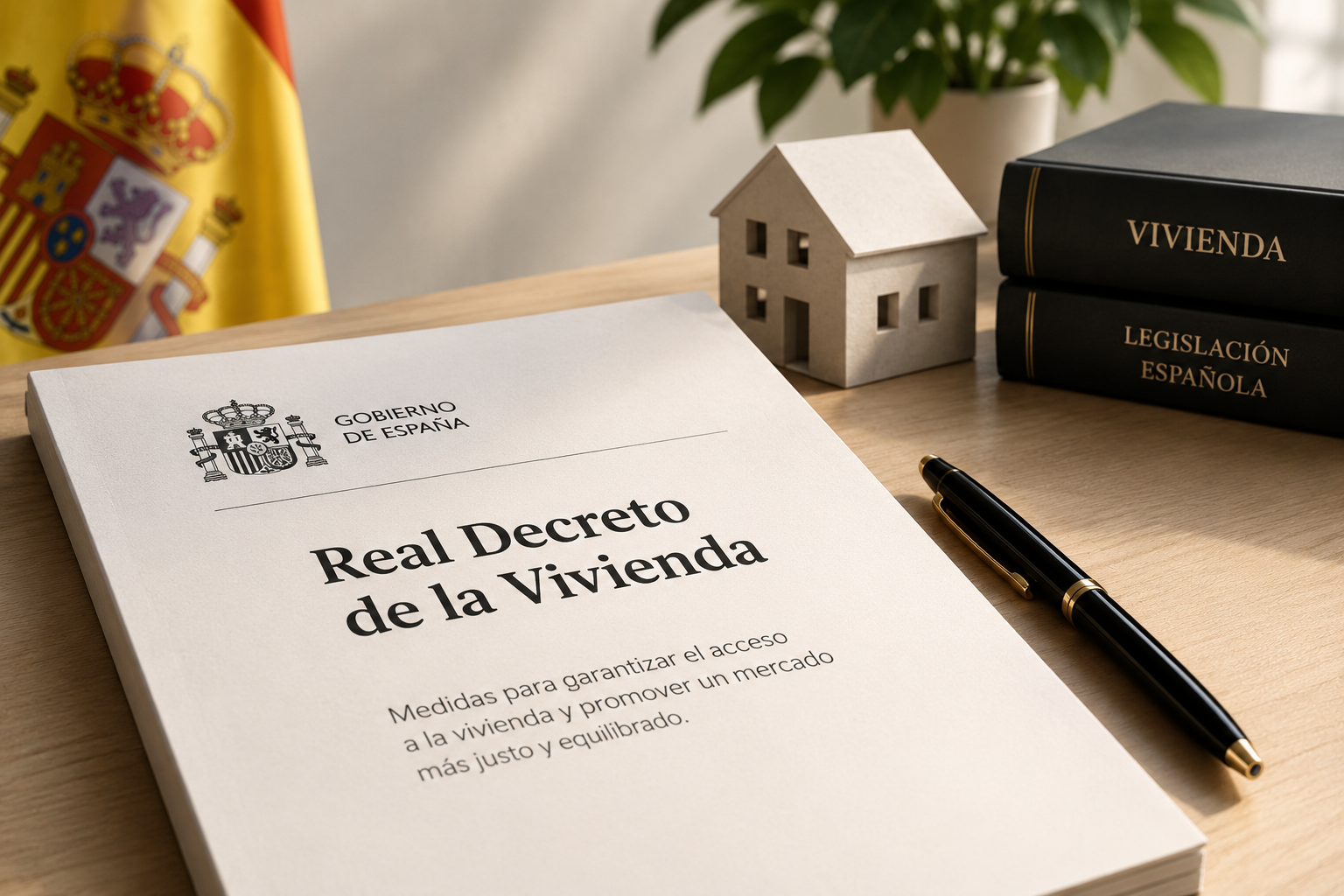
If you own a rental property in Barcelona, the Maresme or any town along the Costa Brava, you have probably heard about the housing decree that the central Government put to a vote in Congress. And like many landlords, you may not be entirely clear on what it involved or what consequences it could have had for you. In this article, we explain it calmly and clearly.
Two decrees, two very different debates
The Government put forward not one but two housing-related decrees. Although the media often referred to them as if they were a single measure, they had very different content and levels of parliamentary support.
- The first contained protective measures for people in vulnerable situations: financial assistance, eviction safeguards, and social support mechanisms. This was the one most likely to pass, at least on paper.
- The second was more controversial: it included automatic extensions of rental contracts and mandatory compensation payments to tenants at the end of the tenancy. This one met with far wider opposition among landlords.
In the end, neither decree was approved. The first was blocked by Junts, who demanded its withdrawal. The second never had a realistic chance either, given the votes against it announced by various parliamentary groups.
Why are small landlords so concerned?
This is the crux of the matter. When we talk about the rental market in Spain — and particularly in areas such as Barcelona or Maresme towns like El Masnou or Premià de Mar — the majority of rental properties are not owned by large investment funds, but by private individuals: people who own a second property and rent it out to supplement their income or as part of their retirement planning.
For this type of landlord, the measures in the second decree were particularly worrying for several reasons:
- Automatic extensions: compelling landlords to extend contracts beyond the agreed term reduces their ability to recover their property when needed — for example, for personal use or for a family member.
- Tenant compensation: making mandatory financial payments to tenants at the end of a contract represents an additional cost that many small landlords have not budgeted for and cannot easily absorb.
- Legal uncertainty: the succession of regulatory changes in recent years has created a sense of instability that is leading some landlords to consider withdrawing their properties from the standard rental market altogether.
The risk of properties leaving the market
Paradoxically, some of the measures designed to protect tenants may produce the opposite effect. If landlords feel that renting out a property is too risky or insufficiently profitable, they tend to turn to other options — selling, short-term lettings, or personal use — which reduces the available supply and, in turn, pushes prices higher.
This phenomenon has already been observed in high-demand areas such as the Eixample in Barcelona and coastal towns along the Costa Brava such as Palamós and Blanes, where the supply of long-term residential rentals has been declining in recent years.
What should you do if you are a landlord?
Even though these decrees did not pass, the debate is far from over. The rental market will continue to be subject to regulation in the coming months, and new legislative proposals are very likely to emerge. In this context, the most sensible course of action is to:
- Review the status and terms of your current rental contracts.
- Ensure that your contracts are correctly drafted and adequately protect your rights as a landlord.
- Stay up to date with regulatory changes so that you can make informed decisions about your property.
- Consider whether the type of tenancy you currently have in place is still the most appropriate for your circumstances.
Stability is also a matter of expert advice
In such a rapidly changing regulatory environment, working with professionals who closely monitor legislative developments makes a real difference. At Fincas Caseuro, we have been managing properties and residential communities in Barcelona, the Maresme and the Costa Brava for over 30 years. We know that a landlord's peace of mind depends on having the right information and the right support. If you have questions about how the new rental regulations may affect you, or if you would like to review your property's situation, do not hesitate to get in touch with us.